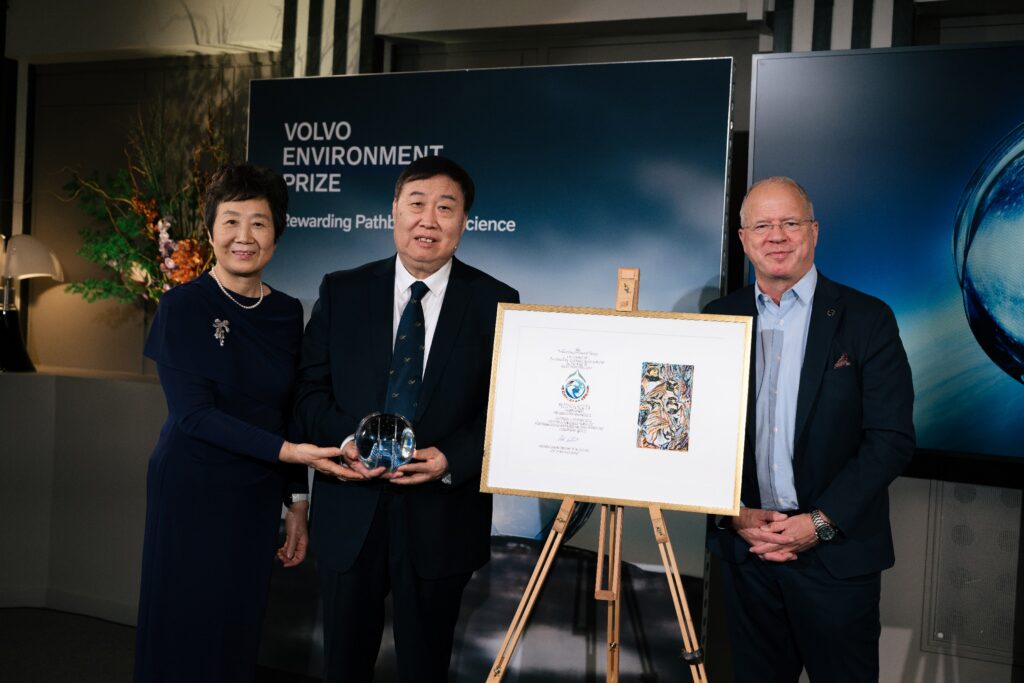
 Laureate Bojie Fu with wife Xilin Wang and Martin Lundstedt, Chairman of the Volvo Environment Prize Foundation.
The Volvo Environment Prize event 2023 starts soon.
Laureate Bojie Fu with wife Xilin Wang and Martin Lundstedt, Chairman of the Volvo Environment Prize Foundation.
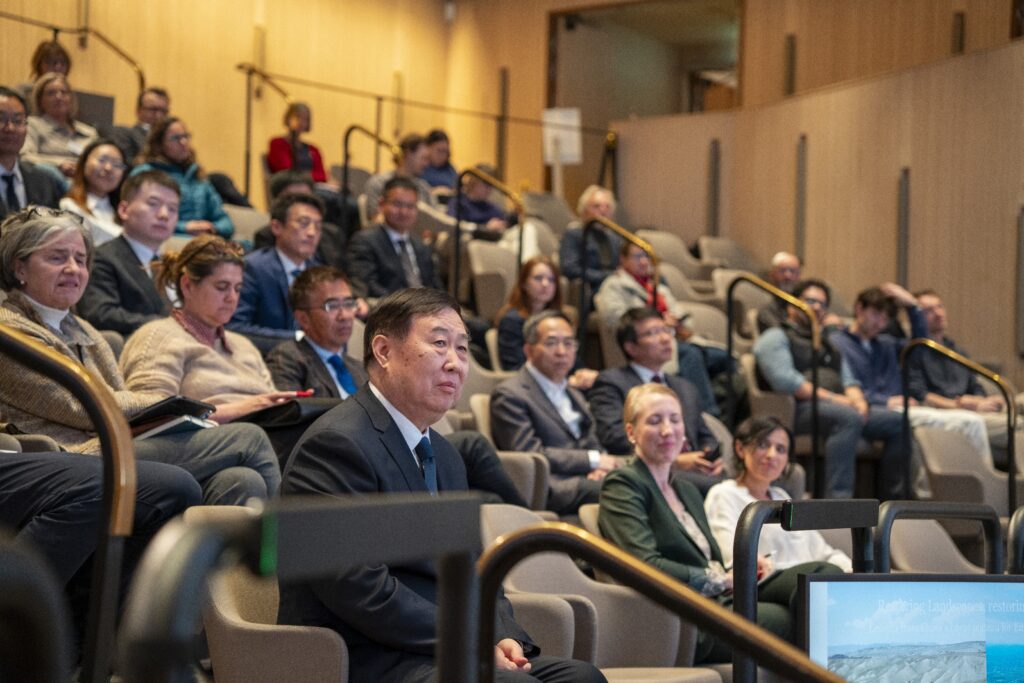
Professor Bojie Fu received the 2026 Volvo Environment Prize at Tändstickspalatset in Stockholm on 2 November, recognizing research that has helped guide the ecological recovery of China’s Loess Plateau. Later that afternoon, he participated in a seminar at the Royal Swedish Academy of Sciences, taking the discussion from China’s experience to the wider challenge of restoring degraded landscapes.
A professor at the Chinese Academy of Sciences, Fu has devoted decades to understanding how land use, soil, water and vegetation interact—and how restoration can improve both ecosystems and people’s lives. His work has helped establish the scientific foundations for the recovery of a region once associated with some of the world’s most severe soil erosion.
At the morning ceremony, Martin Lundstedt, President and CEO of the Volvo Group and Chairman of the Volvo Environment Prize Foundation, presented Fu with the award. The prize includes SEK 1.5 million, a glass sculpture by Erika Lagerbielke, and a handmade diploma by artist Göran Dalhov. Professor Deliang Chen, Chair of the Prize Jury, presented the citation recognizing Fu’s pioneering contributions to sustainability science and the connections between ecological restoration and human well-being.
The program included a documentary exploring Fu’s research and the Loess Plateau’s transformation. Filmed in China, it brought the landscape and the practical significance of his work into the ceremony, showing how scientific knowledge can help communities recover damaged land.
The award also provided an opportunity to consider what other regions can learn from this experience. Fu joined Professor Navinder Singh of the Swedish University of Agricultural Sciences for a discussion moderated by Professor Carl Folke, Chair of the Foundation’s Scientific Committee. The panel’s theme—how to restore degraded landscapes—linked the laureate’s achievements to the decisions facing restoration projects worldwide.
Later in the afternoon, Fu participated in “Restoring landscapes, restoring livelihoods” at the Royal Swedish Academy of Sciences. Organized by the Beijer Institute, Stockholm Resilience Center at Stockholm University and the Volvo Environment Prize, the seminar addressed how ecological recovery can be achieved at scale while protecting water resources, livelihoods and public support. The seminar was recorded and is available to watch here.
The Loess Plateau offers lessons in both the possibilities and the limits of restoration. Bringing vegetation back demands careful attention to the water available to sustain it. Lasting recovery also depends on long-term commitment, scientific monitoring and the power to adapt measures as new findings emerge.
These questions are particularly relevant for Europe as countries develop plans to implement the EU Nature Restoration Regulation. The seminar placed China’s experience within that broader international effort, exploring how restoration can deliver environmental benefits while meeting the needs of the people who depend on the land.
Together, the ceremony and afternoon seminar highlighted the wider significance of Fu’s work: restoring a landscape means knowing its ecological processes, supporting its communities and using science to guide decisions over the long term.
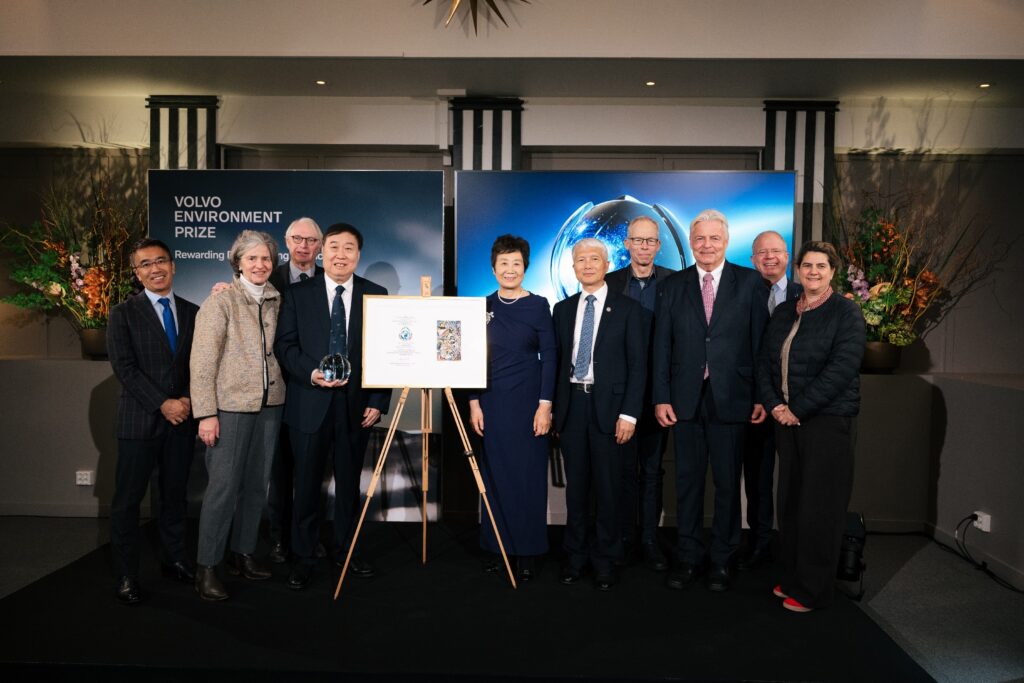 Laureate Bojie Fu, with his wife, Xilin Wang, and members of the Prize Jury and Scientific Committee of the Volvo Environment Prize Foundation.
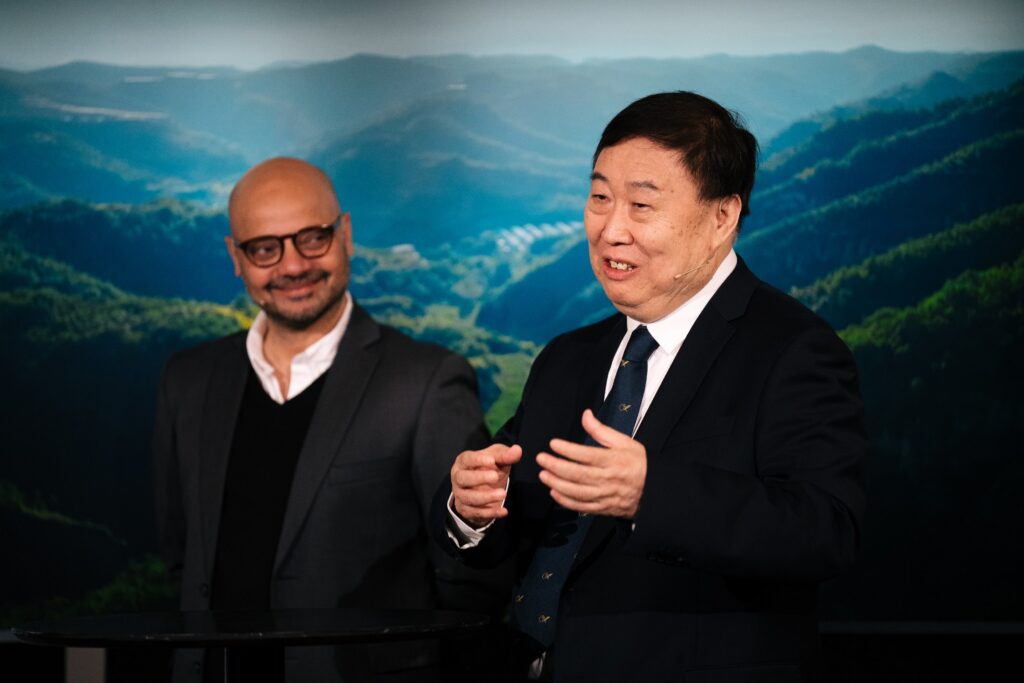 Professor Navinder Singh of the Swedish University of Agricultural Sciences joined Professor Bojie Fu for a panel discussion on restoring degraded landscapes.
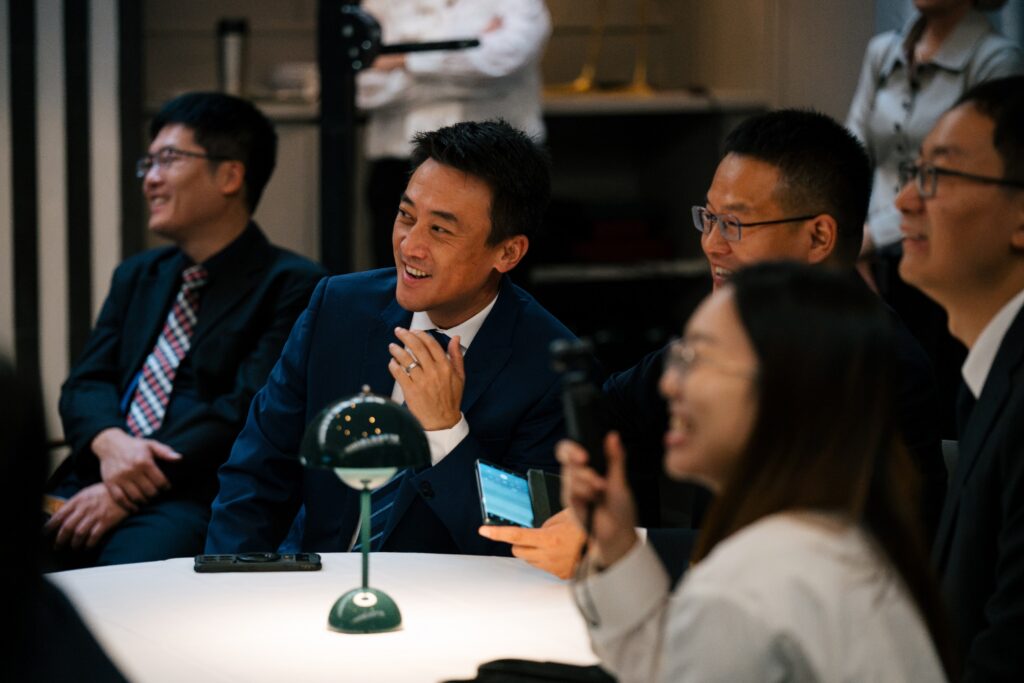
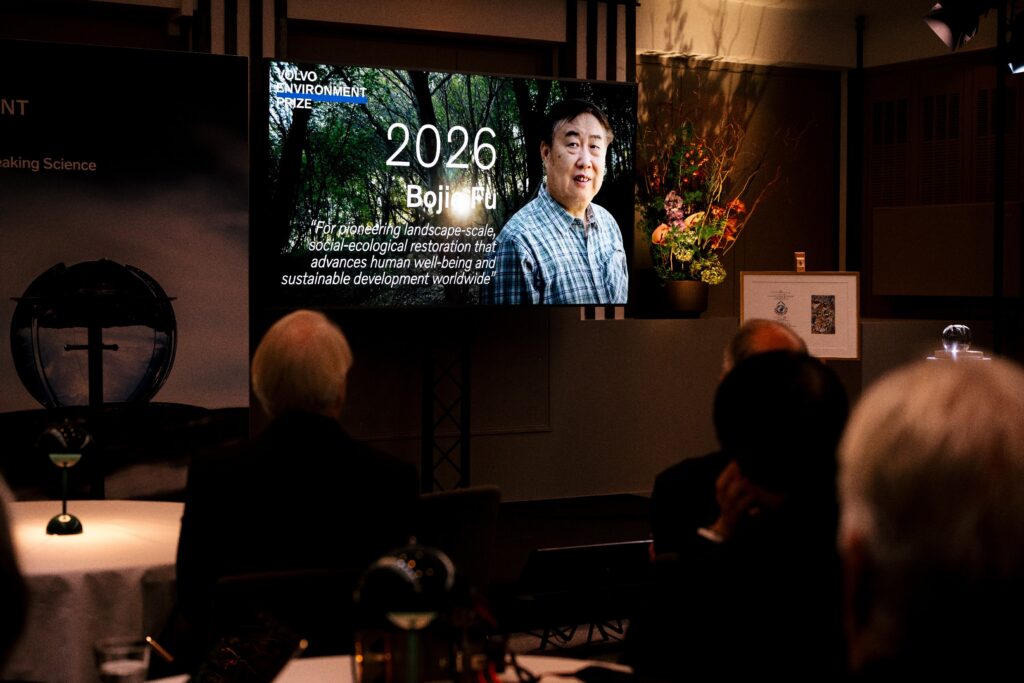
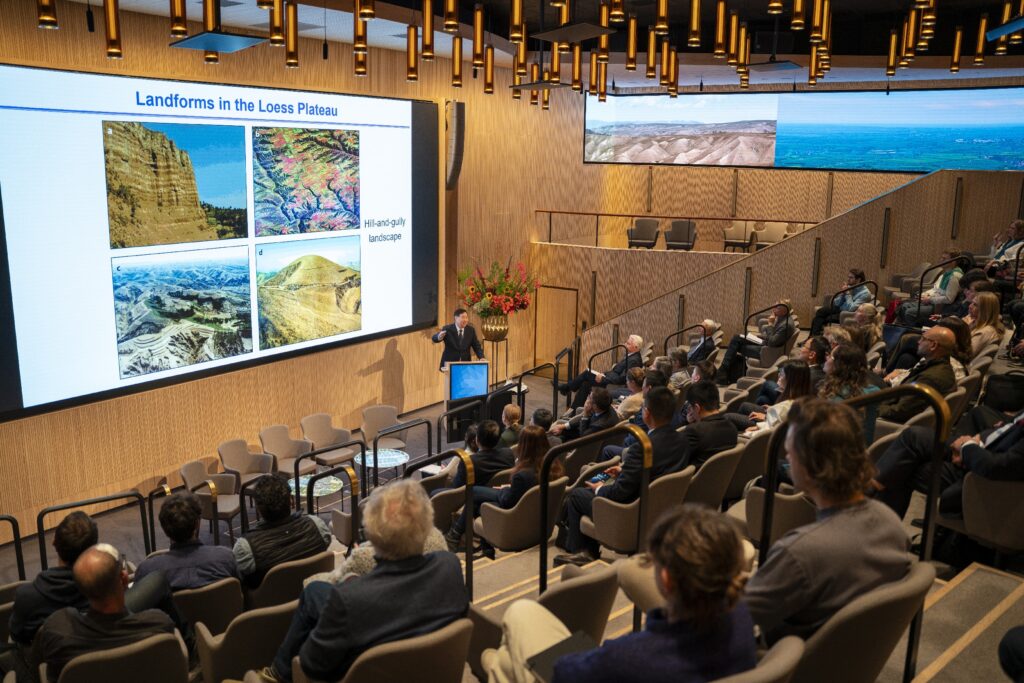 On the day of the prize event, Professor Bojie Fu participated in the seminar “Restoring landscapes, restoring livelihoods” at the Royal Swedish Academy of Sciences.
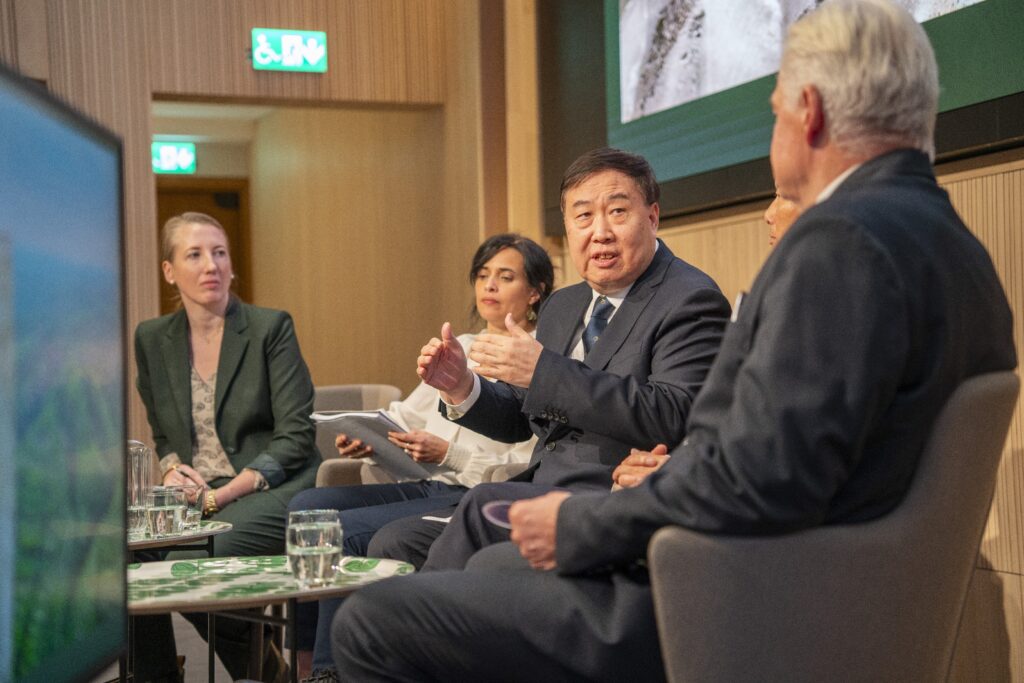 To the left, Dr. Megan Meacham and Dr. Cibele Quieroz of the Stockholm Resilience Center at Stockholm University reflected on lessons learned from restoring the Loess Plateau during a panel discussion.